By Craig C. Downer, Wildlife ecologist
Reprinted from Trend Report Tourism and Hospitality Issue August 2026
I have spent much of my life studying wild horses, wild burros, and endangered wildlife. After conducting ecological studies of Arizona’s Salt River wild horse herd and its habitat in 2012 and again in 2015, I am deeply concerned about the plan to reduce this internationally recognized herd to approximately 125 horses.
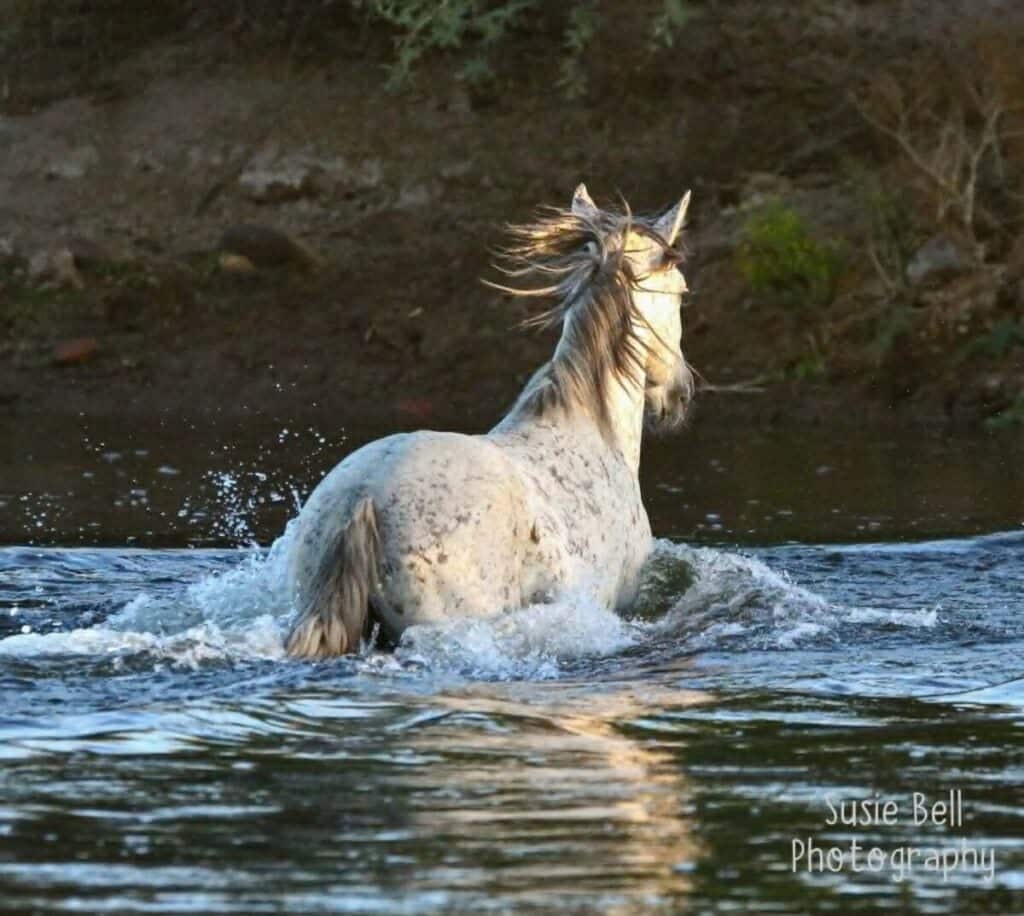
The Salt River horses are more than a wildlife-management issue. They are a living part of Arizona’s natural heritage, a powerful symbol of the American West and an important attraction within the Lower Salt River recreation corridor.
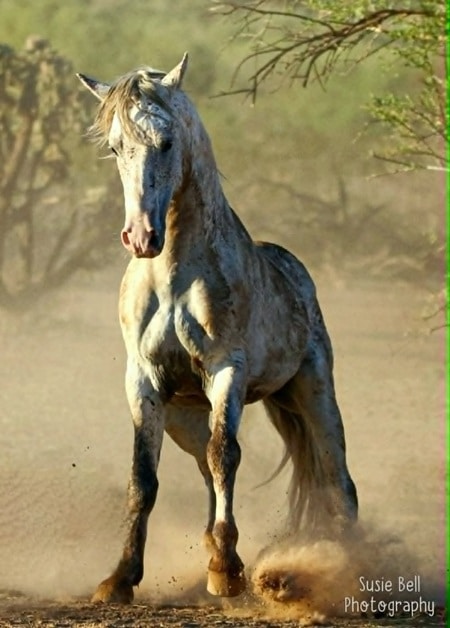 Visitors come from across Arizona, the United States and beyond hoping to see these horses moving freely through the river, desert and riparian landscape. Photographers, kayakers, hikers, birdwatchers, and families are drawn to an experience that cannot be recreated in a zoo, pasture, or staged attraction.
The opportunity to observe a naturally functioning wild horse herd in a spectacular Sonoran Desert setting gives Arizona an eco-tourism resource that few places can offer.
For that reason, the Salt River horses should be managed as an ecologically adapted wildlife population—not as unwanted livestock occupying land intended for other interests.
As Arizona moves toward a substantially smaller herd, the public should be asking a basic question: Is a population of approximately 125 horses sufficient to maintain a healthy, genetically viable and publicly visible herd over the long term?
In my professional opinion as a wildlife ecologist, the answer is no.
Such an artificially low population could interfere with the herd’s ability to maintain sufficient genetic diversity and adapt to the rigors of survival in the wild. It could also diminish the natural social structure, family bands, and behaviors that make observing these horses such a meaningful wildlife experience.
A herd reduced too far may eventually become increasingly dependent on human intervention rather than remaining naturally healthy and self-sustaining. Arizona could be left with a token population that is technically present but no longer functions as a truly wild herd.
That would be a loss not only for conservation but also for the visitors, photographers, educators, scientists and local businesses that benefit from the herd’s presence.
A small, intensively managed population may require horses from outside the herd to be introduced periodically to prevent excessive inbreeding. Such introductions could alter the locally adapted characteristics the Salt River horses have developed over generations within this distinctive river and desert ecosystem.
Genetic diversity gives a wildlife population the range of traits it needs to withstand disease, drought, habitat changes, climatic extremes, and other environmental pressures. When a herd becomes too small, closely related horses are more likely to reproduce with one another.
This increases the possibility that harmful recessive traits will appear and that the population will experience declining vigor, adaptability, and reproductive fitness.
A sufficient degree of genetic diversity is therefore necessary to prevent inbreeding and preserve the long-term health of any naturally living population.
I also question the frequently cited assertion that a population of only 150 to 200 horses is necessarily adequate to preserve long-term genetic health. Some international wildlife-conservation standards involving wild equids point to the need for much larger populations when evaluating viability over many generations.
No single number, however, can determine whether a population is sustainable.
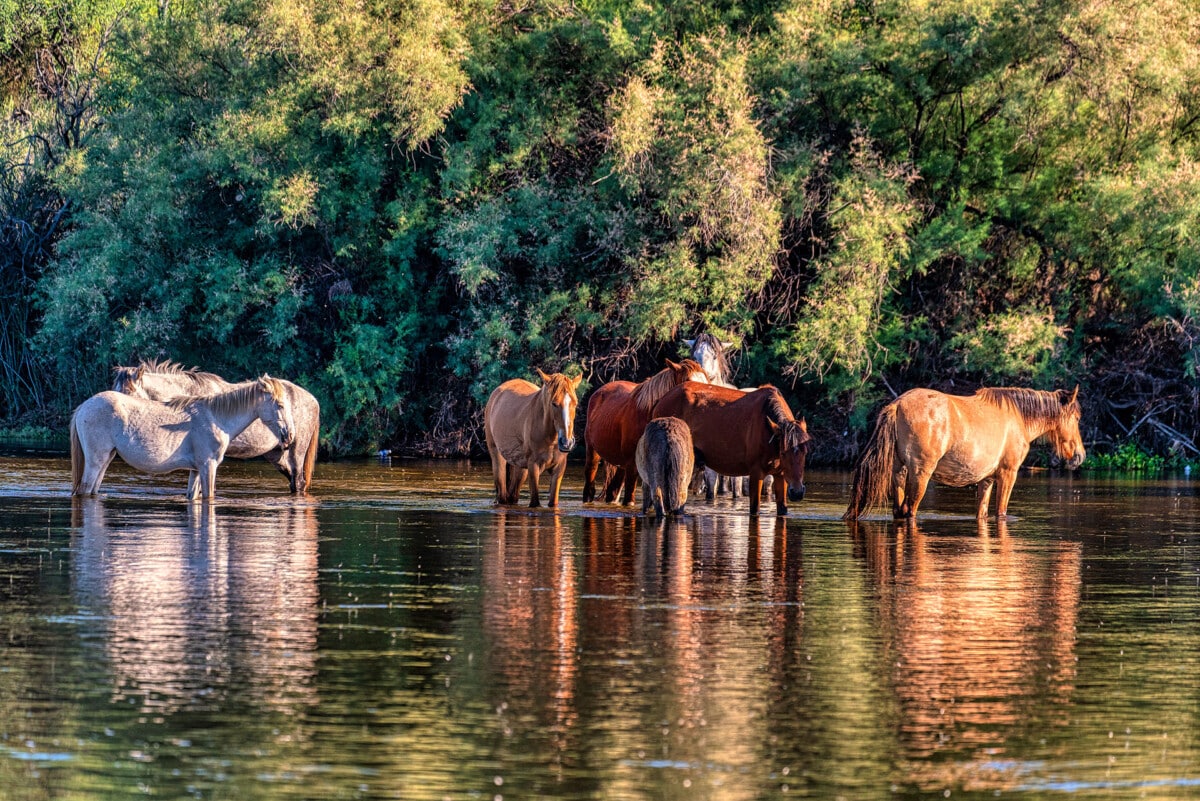
An appropriate herd size must account for available habitat, water, forage, migration, reproduction, mortality, predation, and the opportunity for genetic exchange with other populations. It should also consider whether enough horses would remain to preserve the natural herd dynamics and wildlife-viewing opportunities that have made the Salt River corridor so distinctive.
Management decisions must be based on the conditions affecting this particular herd within this particular ecosystem.
That is why Arizona should commission a genuinely independent scientific review involving wildlife ecologists, equine geneticists, habitat specialists, and other qualified experts before removing any horses.
Such a review should determine whether the proposed population target would preserve a healthy, naturally functioning and self-sustaining herd—or leave behind a small, intensively managed display population requiring continual human manipulation simply to survive.
The review should also evaluate the herd’s contribution to outdoor recreation, environmental education, wildlife photography and nature-based tourism.
Eco-tourism depends on protecting authentic natural experiences. Visitors are not traveling to the Salt River merely to confirm that a few horses remain. They come hoping to observe wild family bands interacting naturally within their habitat.
My concerns extend beyond the proposed herd number. I also challenge the common portrayal of free-roaming horses as invasive animals with no legitimate ecological role in North America.
I regard the horse as a returned native species. The genus Equus has deep evolutionary roots in North America. Horses evolved on this continent, dispersed into other parts of the world, and later disappeared from North America before being reintroduced by Europeans.
Although today’s free-roaming horses largely descend from horses once domesticated by people, their deeper evolutionary origins remain North American. When horses are allowed to live freely, they can rapidly readapt to natural conditions and recover many of the instincts, behaviors, and social relationships needed to survive in the wild.
These behaviors are part of what makes the Salt River herd so valuable to wildlife observers. Visitors can witness family bonds, herd communication, protective stallions, nurturing mares, young foals, and the seasonal movements of animals adapting to the landscape around them.
Wild horses should not automatically be treated as ecological misfits. They can contribute to western ecosystems through seed dispersal, nutrient movement, soil enrichment, and their relationships with other animals and plant communities.
Horses digest vegetation differently from cattle, sheep, deer, and other ruminants. Horses are hindgut fermenters. Their droppings can retain partially digested plant material that adds organic matter to the soil, supports insects and microorganisms, spreads seeds, and contributes to soil humus.
Healthy soils are better able to retain moisture and nutrients. By contributing organic material and transporting seeds, horses can benefit a variety of plants, wildlife, and soil organisms.
The Salt River horses may also play an important role in transporting nutrients between the richly vegetated river corridor and the surrounding Sonoran Desert as they travel across the landscape.
These ecological relationships provide opportunities for scientific research, guided nature tours, educational programming, and interpretive experiences that could strengthen the Salt River corridor as an eco-tourism destination.
This does not mean horses have no environmental impact. Every species affects its habitat. Any animal population can damage the land when confined in excessive numbers, restricted to an inadequate area, or denied access to sufficient water and forage.
The environmental effects of the Salt River horses should therefore be measured objectively and compared with the effects of livestock grazing, recreation, development, water diversion, vehicle traffic, and other pressures affecting the same public lands.
The horses should not be singled out simply because they are highly visible.
I am particularly concerned about management systems that impose very low population targets on wild horses while continuing to allocate substantial public-land resources to domestic livestock and other economic uses.
Too often, public-land decisions are shaped by commercial interests before the ecological, cultural, and tourism value of wild horses and burros is fully and fairly considered. Economic priorities should not outweigh genuinely objective scientific recommendations.
Wildlife conservation and economic value are not opposing goals. Protecting a healthy wild horse population can support local outfitters, photographers, restaurants, lodging businesses, tour providers and recreation-related businesses while also preserving Arizona’s natural character.
My preferred alternative is a conservation strategy known as reserve design. Reserve design begins by examining the amount, quality, and connectivity of habitat required to sustain a viable wildlife population.
Instead of starting with a predetermined number of horses and then reducing the herd to meet it, managers should evaluate the entire ecosystem. They should determine how much land, water, seasonal range, and habitat connectivity are needed for the herd to remain genetically healthy, ecologically adapted, and naturally self-sustaining.
I believe the Salt River horses should have access to appropriate portions of the surrounding Sonoran Desert hills and mountains. A larger, more connected habitat would allow the horses to distribute themselves more naturally and could reduce the concentrated use of heavily traveled areas along the river.
It could also create a broader conservation and recreation landscape in which wildlife viewing is dispersed more safely and sustainably.
Thoughtful eco-tourism planning could include clearly designated viewing areas, educational signage, responsible photography guidelines, habitat restoration, visitor-management strategies and partnerships with local communities and conservation organizations.
Such measures would help protect the horses while also reducing conflicts between wildlife, visitors and other public-land users.
Management should allow natural processes to play a much greater role.
The Salt River horses are not an abstract issue for me. My studies examined the herd, its habitat, vegetation, and its relationship to the Salt River ecosystem. I believe this research contributed to the effort that prevented the herd from being removed approximately a decade ago.
Arizona officials should exercise the same caution today before implementing a major population reduction that may prove difficult—or impossible—to reverse.
Once genetic diversity, natural herd behavior and public confidence are lost, they may not be easily restored. Once the Salt River experience is diminished, Arizona may also lose part of a tourism identity that has grown around the presence of these horses.
At a minimum, the Arizona Department of Agriculture should publicly disclose the scientific evidence supporting the proposed target, the genetic data used to evaluate the herd, the habitat and forage studies underlying the plan, and the long-term consequences of maintaining the herd at approximately 125 horses.
The agency should also evaluate the herd’s economic, recreational, cultural and educational value before taking irreversible action.
The issue is not whether the Salt River herd should be responsibly managed. The issue is whether management decisions are based on independent science, transparent evidence and a genuine commitment to preserving a wild, naturally functioning population.
Arizona has an opportunity to become a national model for wildlife-based tourism and humane, science-driven wild horse management.
The Salt River corridor could demonstrate how habitat protection, responsible recreation, environmental education and local economic activity can work together. But that opportunity depends on maintaining a herd large enough to remain genetically healthy, socially intact and truly wild.
My message to Arizona policymakers and the public is straightforward: Take the time and make the effort to learn the greater truth about the wild horses of the Salt River and the positive role they can play in the natural ecosystem and in human society.
Before a single horse is removed, Arizona should be able to demonstrate that its population target will preserve—not merely display—the Salt River wild horse herd for generations to come.
________________________________________________________________________________________________________________
Craig Carpenter Downer is a wildlife ecologist, conservationist, author, and president of the Andean Tapir Fund/Wild Horse and Burro Fund. A member of the IUCN Tapir Specialist Group, he has conducted extensive field research on wild horses, burros, and Andean tapirs. His books include The Wild Horse Conspiracy and the two-volume Wonder Streams of the Soul.