August 5, 2026 | By Craig C. Downer, wildlife ecologist
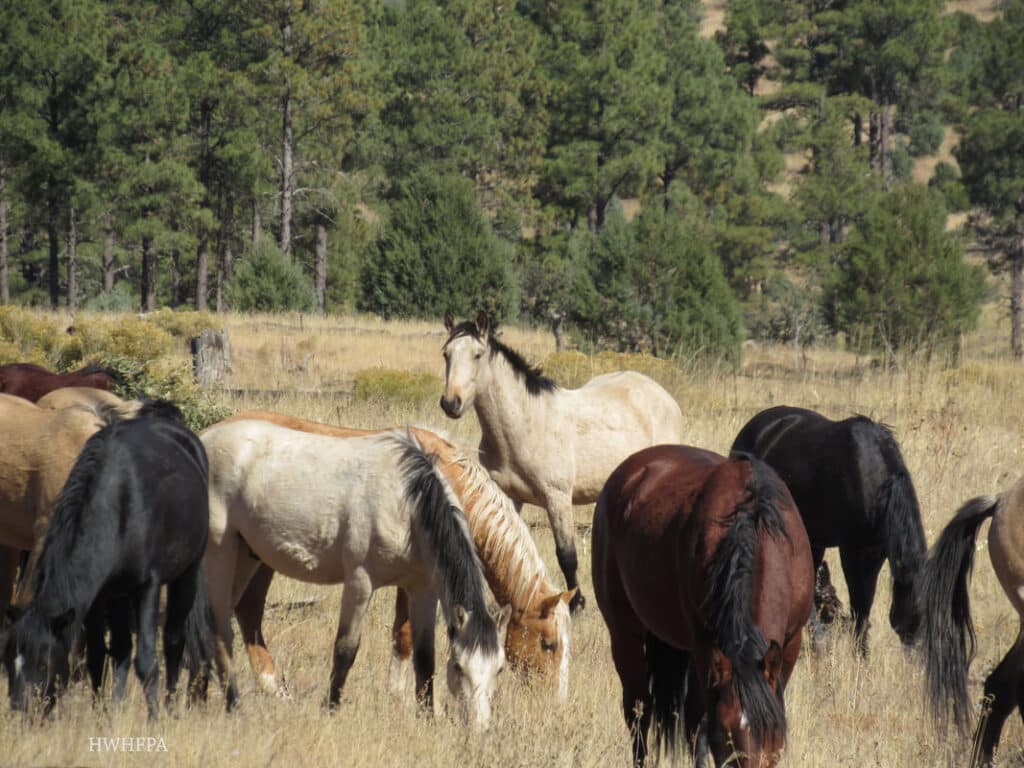
I read with interest your article, “Lawsuit Tests Boundaries of Two National Forests,” and could not help but think the Heber horses themselves are now on trial.
The lawsuit raises a question beyond the Apache Sitgreaves National Forest: Should public land decisions be based on site-specific science or long-standing false assumptions about wild horses?
No one disputes the importance of healthy forests and watersheds. The issue is whether the Forest Service has demonstrated that the Heber horses are responsible for the habitat degradation it alleges. Before removing an entire population of free-roaming horses, the agency should produce clear evidence that these horses are a primary cause.
That burden has not been convincingly met.
Western ecosystems are shaped by livestock grazing, elk, deer, drought, wildfire, roads, recreation, invasive plants, timber management, and climate. The same analysis is required when assessing impacts on sensitive species such as the endangered New Mexico meadow jumping mouse. Separating these effects requires site-specific evidence. Observing habitat damage where horses are present does not prove they caused it.
Correlation is not causation.
Too often, wild horses become the default explanation whenever range conditions decline. Responsible management requires identifying the actual causes before prescribing a remedy.
The Heber horses deserve the same scientific standard.
As an ecologist who has studied free-roaming horses for decades, I have found that horses occupy a distinct ecological niche. Unlike cattle, they are highly mobile and distribute their grazing across wider areas. Their digestive system processes vegetation differently, and their movements can contribute to seed dispersal, soil nutrient enrichment, increased water retention, and disturbances that may benefit plant and animal communities.
This does not mean horses can never cause localized impacts. Any large herbivore, including horses, elk, deer or livestock, can affect vegetation when numbers exceed available forage and water. The question is not whether horses have any impact. Every grazing animal does. The question is whether management decisions are based on objective evidence rather than assumptions or political pressure.
The Heber horses are not merely numbers on a management chart. They are sentient beings with complex social bonds, family groups and an established place in the landscape. Decisions that could permanently remove them from the only home they have known should be based on compelling evidence, transparent analysis and the least harmful effective approach.
Public trust depends on that transparency.
The federal court’s preliminary injunction does not resolve the final legal questions. It recognizes that serious issues must be examined before irreversible action occurs. That is how the legal system should function when the fate of an entire free-roaming herd hangs in the balance.
Science should welcome scrutiny, not fear it.
This case offers an opportunity to improve public land management and nature conservation fair to all interests. Independent ecological assessments, rigorous monitoring and public access to data and input could help establish whether decisions are being made for the health of the land and its creatures rather than to satisfy competing interests.
The debate should not become a contest between people who care about wild horses and those who care about healthy forests. Those goals are compatible. Horses offer many positive contributions to the ecosystem, including wildfire mitigation.
Healthy ecosystems depend on informed stewardship. Stewardship begins by asking difficult questions, testing assumptions, and following the evidence
If the evidence shows management changes are needed, those changes should be transparent and proportionate. But if the evidence does not support the conclusions being advanced, the public deserves the honesty to acknowledge that.
The Heber horses should not be condemned by assumption. Their fate should be decided by evidence, transparent science and the rule of law. Anything less would fail both the horses and the public lands entrusted to our care.
Craig Downer is a wildlife ecologist who has conducted scientific studies on many wild horse and burro herds throughout the West, including in Arizona, particularly the Heber herd in ASNF and the Salt River herd in Tonto NF. I have also helped produce videos on the wild horses and burros of the West, including the Salt River mustangs. My 2021 Heber study resulted in a major illustrated and peer-reviewed publication by a major horse-related professional journal: Cheiron, which I would be glad to share (published in 2022). I founded and am president of the nonprofit Wild Horse and Burro Fund / Andean Tapir Fund based in Nevada, and my websites are https://andeantapirfund.com and https://thewildhorseconspiracy.org. I have written a thorough and well-sourced illustrated book entitled The Wild Horse Conspiracy, available online, as well as numerous scientific and popular articles.